The river begins in ice, high enough up that it has never had a name most maps bother to print, and ends in salt, a few kilometres from here, in the Caribbean. Between the two it passes our stones, and for a few hours a day it belongs to whoever is standing in it — not in any legal sense, simply in the sense that a river gives its attention fully to whoever is paying attention back.
Journal
What the River Knows
Water arrives from the snowline and leaves nothing unchanged.
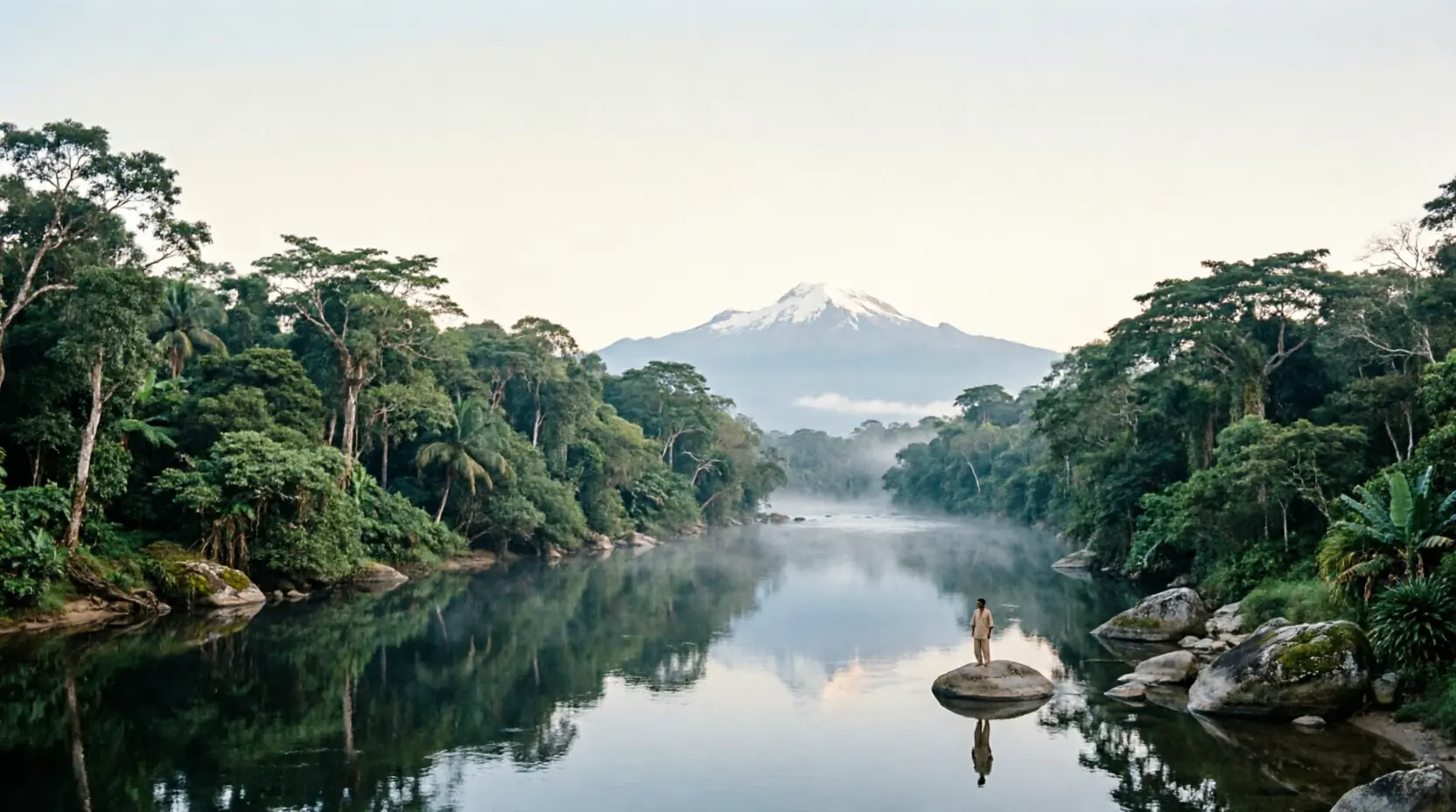
Nothing in the valley is older, and nothing is more reliably awake.
What changes through the year
It carries the season down with it, and the season is written in its colour more clearly than in any calendar. Clear and almost invisible in the dry months, when the water moves fast over pale stones and you can watch a fish hold its position against the current from ten metres away. The colour of milk tea after heavy rain higher up the valley, thick with sediment that will settle, eventually, somewhere it was never asked to settle.
Neither state is more or less the river. Both are the same water doing what water does when a mountain this steep decides how fast it should move.
The oldest thing here
Nothing in the valley is older than this river, and nothing here is more reliably awake. The forest changes across decades, the buildings across years, the guests across days. The river changes across minutes, and has been changing across minutes for longer than any of the other timelines combined. Standing in it puts you briefly in contact with the fastest clock and the oldest one at the same time, which is a strange and clarifying thing to feel in the body rather than just understand as an idea.
Fish move differently than the current, which is how you learn to see them at all — a shape holding still against motion, using just enough effort to stay exactly where it wants to be. People in the river tend to do something similar, without being told to. Stand still enough, long enough, and you are no longer fighting the cold. You are simply positioned inside it.
The whole practice
Stand in it long enough and the day rearranges itself around what just happened rather than around what was scheduled to happen next. That is the whole practice, if it can even be called one. There is no technique to teach beyond showing up at the water's edge and getting in. The river does not require expertise. It only requires that you actually arrive, cold feet and all, rather than admiring it from the bank and calling that the same thing.
Nothing about it is dramatic. There is no revelation waiting in the water, and anyone who promises one is selling something. What there is, reliably, is a few minutes in which the body is fully occupied and the mind has nothing left to rehearse. That is rarer than it sounds, and it is the reason we keep pointing at the river instead of at a schedule.
We have watched this happen to enough guests, across enough seasons, to stop being surprised by it and start simply pointing people toward the water in the morning, before the coffee gets cold, before the day has a chance to talk them out of it.
Continue in the Sierra
Quiet updates, new articles, seasonal openings.
The Sierra is patient. Write to us when you are ready.